


The Psychological Barrier: Is Investing in the UK Actually Safe?
When evaluating what is a stocks and shares isa, it's important to understand the key differences. When evaluating what a stocks and shares ISA is, it's vital to grasp the key differences. Investing in the UK is not gambling. Understanding this distinction is crucial for any beginner before investing a single pound. For those asking, 'Is investing in the UK safe?', it's essential to consider the structured safeguards that protect investors.
The fear is understandable. Markets decline. Headlines alarm. Without context, seeing a portfolio dip can seem like losing chips at a roulette table. However, this comparison does not hold up. Gambling is a zero-sum game where the house has a structural edge. Investing in diversified funds, conversely, provides partial ownership of real businesses generating actual revenue over time.
Regulation is central to UK investor protection. The Financial Conduct Authority (FCA) authorises and supervises every legitimate investment platform in the UK. If a provider isn't on the FCA register, it raises a serious red flag. Regulated platforms must adhere to strict standards regarding how they handle client money; your funds are kept separate from the firm's assets.
Market volatility is normal; total capital loss is not. Short-term fluctuations are the price for long-term growth. A broadly diversified fund rarely falls to zero, as that would require every company within it to fail simultaneously. If a platform were to collapse, the Financial Services Compensation Scheme (FSCS) protects up to £120,000 per person per firm.
Once you understand these safeguards, the next question is: where do I begin? For most UK beginners, the answer lies in understanding what a stocks and shares ISA is and why it is often the most tax-efficient wrapper for your investments.
What is a Stocks and Shares ISA (and Why It's Essential)?
A Stocks and Shares ISA is the most important tool for UK beginners, not because of what it holds, but because of how it holds it. Grasping what a stocks and shares ISA is can significantly streamline your investment journey.
The ISA is a wrapper, not an investment itself. Think of it as a protective case around your investments. Inside, you can hold funds, shares, bonds, and more. Anything within the wrapper is shielded from two major drains on long-term returns: capital gains tax and dividend tax. Without the ISA wrapper, the government takes a cut whenever your investments grow or pay out income. With it, that growth is entirely yours.
The tax advantages are clear:
- No Capital Gains Tax on profits when selling investments held inside the ISA
- No Dividend Tax on income paid into the ISA from shares or funds. (Withholding Tax on US or non UK)
- Annual allowance of £20,000 — as confirmed by HMRC and MoneySavingExpert, UK residents can shelter up to £20,000 each tax year
- Flexibility to withdraw — your money is not permanently locked away, though the account rewards patience and long-term thinking
Understanding this withdrawal flexibility is important. You can access your money if circumstances change, but withdrawing early tends to undermine the compounding growth that makes ISAs powerful over time. The account benefits those who leave it alone.
Once you have the right wrapper, the next question is what to put inside it, which is where the debate between individual shares and funds becomes crucial.
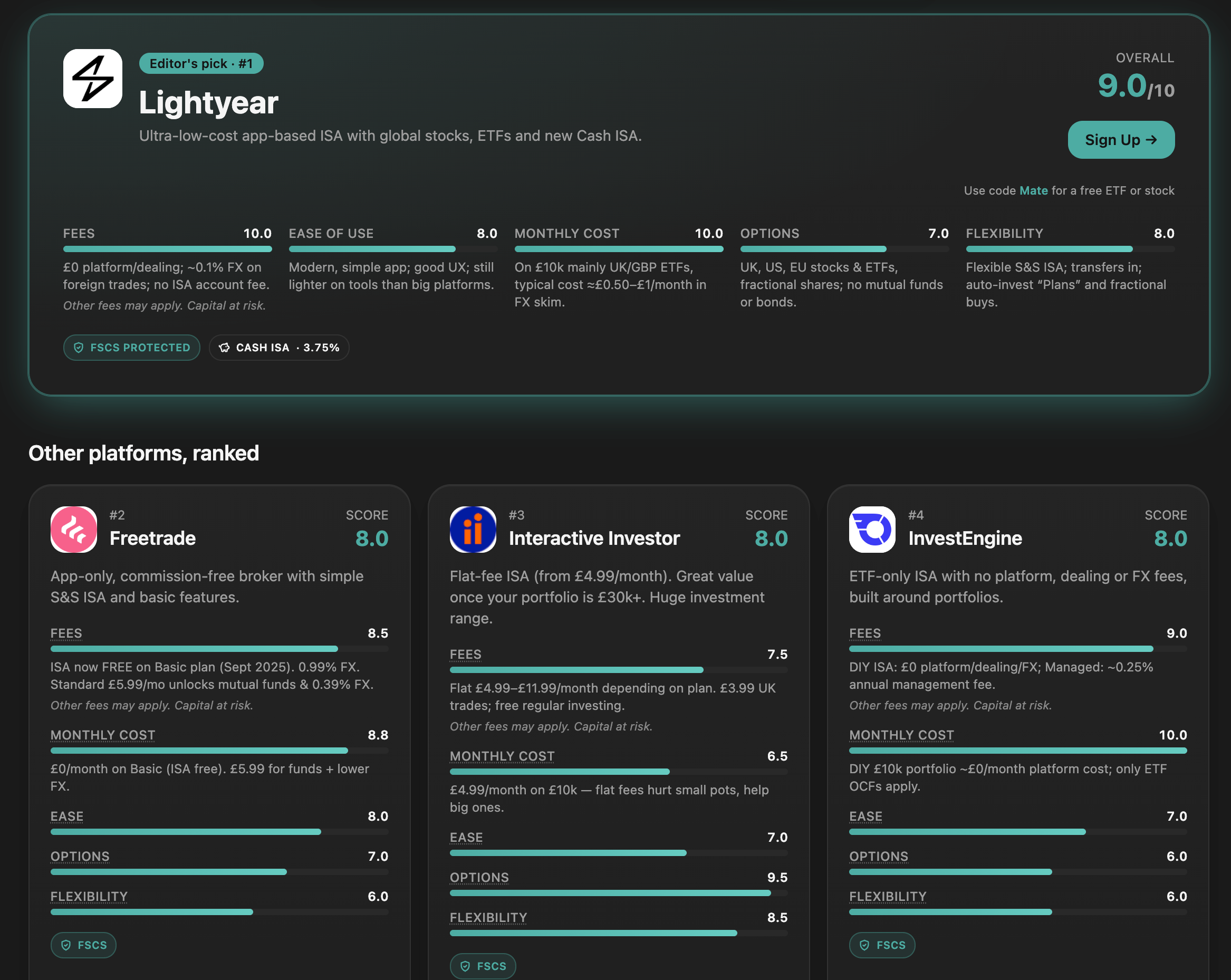

Get up to £100 in a free stock or ETF | Use code 'MATE'
Affiliate link. Capital at risk. ISA rules apply.
The Martin Lewis Approach: Funds vs. Individual Shares
Choosing between individual shares and index funds is a key decision for beginners. Evidence strongly supports one direction. As Martin Lewis notes on MoneySavingExpert, "for most, the best way to invest is through a fund, where a professional or a computer picks a range of investments for you." This insight cuts through much of the noise beginners face.
Spreading your money across hundreds of companies through a fund is far safer than betting on one or two individual shares. The logic is simple: if one company collapses, a diversified fund absorbs the impact across its entire portfolio. If you had invested all your capital in a single firm, the damage could be severe and hard to recover from.
This is the classic 'eggs in one basket' problem. That's why those asking "Is investing in the UK safe?" often hear the same answer: yes, provided you diversify sensibly.
For busy individuals, index funds offer something invaluable: a "set and forget" strategy. You invest regularly, the fund tracks a market index like the FTSE 100, and you largely leave it alone. According to the Investment Association, passive funds have gained popularity because they eliminate the pressure of constant decision-making. That simplicity is not a compromise; it is often the smarter strategy. Once you understand the value of consistency in your investment approach, the next question becomes: how little do you need to start?
How to Start Small: The Power of Compound Interest
Starting small is not a compromise. It is the most effective strategy for beginner UK investors, and the mathematics prove it. For those considering investing for beginners in the UK, starting small can be very beneficial.
A common question on forums like Reddit's R/UKPersonalFinance is whether starting at 18, 25, or even 35 is worthwhile. The answer is yes. What changes with age is not the viability of investing, but the urgency of starting.
You do not need thousands of pounds. Contributing £25 to £50 a month, invested consistently within a Stocks and Shares ISA, is enough to build meaningful wealth over time. This aligns with the core message of Martin Lewis's investing guide at MoneySavingExpert: start with what you can afford, and let time do the heavy lifting.
Here's how compound interest transforms modest contributions across three time horizons:
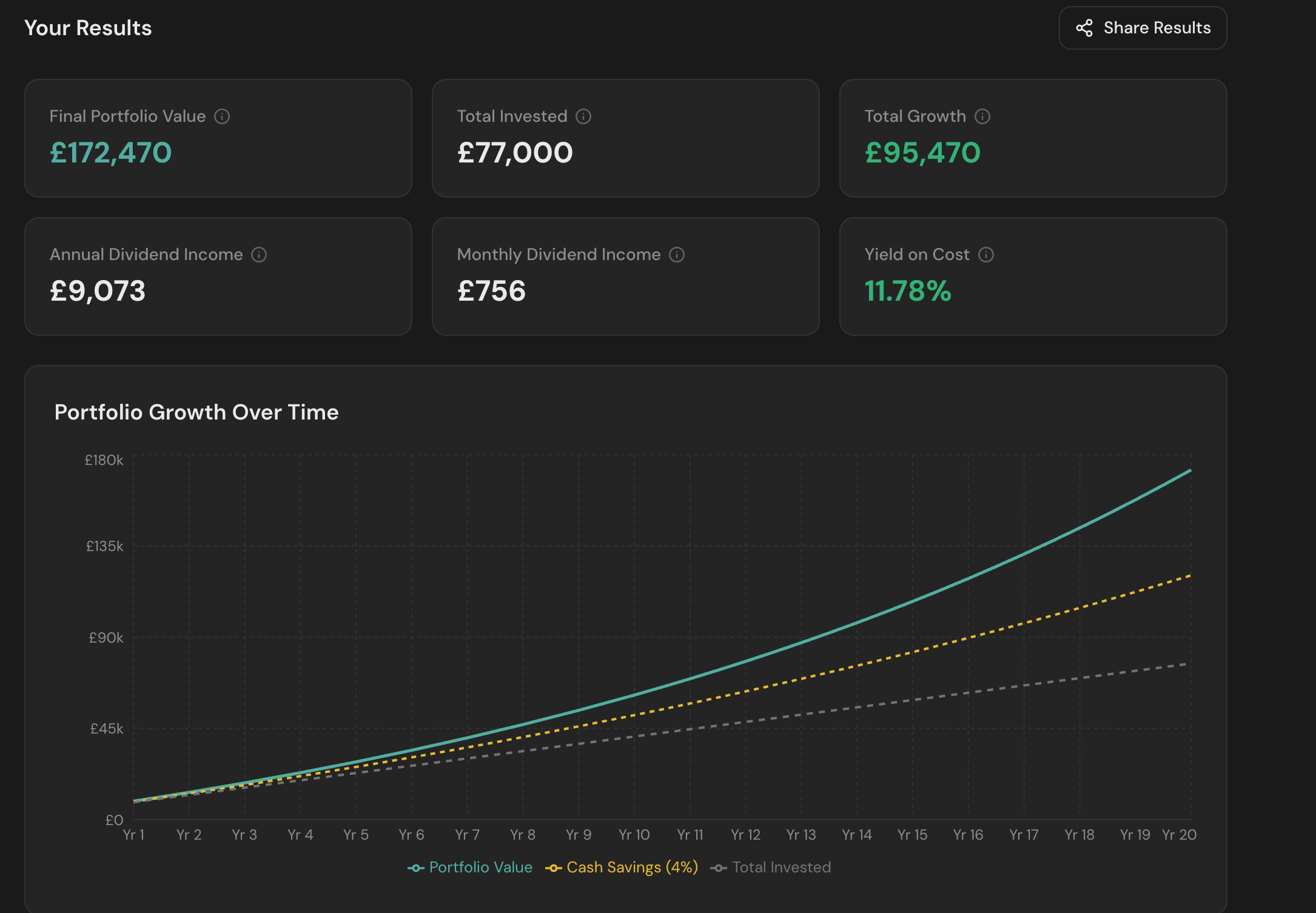
- After 10 years — £50 a month at an assumed 7% annual growth produces about £8,700, despite only £6,000 being deposited.
- After 20 years — the same contribution grows to approximately £26,000, with £12,000 contributed.
- After 30 years — investing £100 a month could result in over £120,000, despite only £36,000 being deposited, according to the Your Money Mate Portfolio Growth Calculator.
Time in the market consistently outperforms timing the market. Waiting for the "perfect moment" to invest is a costly mistake. Markets fluctuate; however, long-term investors who stay the course benefit from compounding returns that accelerate significantly in later years. Understanding this principle is foundational, but knowing the pitfalls that derail even well-intentioned investors is equally important.
Common Pitfalls for New UK Investors to Avoid
For those new to investing in the UK, the biggest threats to long-term returns are not market crashes; they are the quiet, avoidable mistakes that erode your wealth before it has a chance to grow.
The most damaging habit is ignoring fees. A 1% difference in annual platform or fund charges can cost tens of thousands of pounds over an investing lifetime, according to Vanguard UK research. When comparing platforms, always check the total annual cost, not just the headline rate.
Four pitfalls frequently catch beginners:
- High platform fees. Even seemingly small charges work against you just as returns work for you. Prioritise low-cost index fund platforms and read the full fee schedule before committing.
- Checking your portfolio daily. Frequent monitoring leads to emotional, reactive decisions. Markets fluctuate constantly; your strategy should remain steady. Set a monthly review date and adhere to it.
- Following 'finfluencers' promising extraordinary returns. Promises of 100% gains on crypto or forex are often misleading. The Bank of Scotland investing guide clarifies that regulated, diversified investing tends to be more effective over time than speculative tips.
- Investing before building an emergency fund. Before investing, ensure you have three to six months of living expenses in accessible cash savings. Without this buffer, an unexpected bill could force you to sell investments at the worst possible time.
Avoiding these errors puts you ahead of most beginners. With pitfalls mapped out, it's worth consolidating everything into a practical starting checklist which is exactly where we are headed next.

Your Money Mate Plus
ETF & Stock Screener With Premium FMP data stock selection with advanced overlap and portfolio health scores, Online Courses & Exclusive Content. With a supporting Discord Community.
The Bottom Line: Your Beginner Checklist
Understanding how to start investing UK-style boils down to five straightforward principles that, together, remove guesswork and replace it with a repeatable system.
Previous sections have explained the mechanics compound interest, common pitfalls, the psychology of market dips. Now let's distil all that into actions that truly make a difference for beginner investors.
- Open a Stocks and Shares ISA first. Sheltering your returns from tax is the most impactful structural decision you can make before investing a single pound. Your annual £20,000 allowance resets each tax year, so use it.
- Choose low-cost global index funds. Instant diversification across hundreds of companies, at a fraction of the cost of actively managed funds, tends to outperform in the long run. Lloyds Bank confirms index funds remain a cornerstone recommendation for beginners.
- Automate your contributions. As MoneyHelper explains, pound-cost averaging investing a fixed amount regularly regardless of share price smooths volatility and removes emotional decision-making entirely.
- Use calculators and educational tools to visualise your trajectory over time, not just your current balance.
- Think in decades, not days. Time in the market consistently outperforms attempts to time the market.
The most effective investing strategy is also the simplest: start small, stay consistent, and let time do the heavy lifting. The tools and knowledge to implement this are closer than you might think.
Key Takeaways
- No Capital Gains Tax on profits when you sell investments held inside the ISA
- No Dividend Tax on income paid into the ISA from shares or funds
- Annual allowance of £20,000 — as confirmed by HMRC and MoneySavingExpert, UK residents can shelter up to £20,000 each tax year
- Flexibility to withdraw — your money is not permanently locked away, though the account is designed to reward patience and long-term thinking
- Use calculators and educational tools to visualise your trajectory over time, not just your current balance
- Open a Stocks and Shares ISA and diversify sensibly to maximise investment safety and returns

Your Money Mate Investing Tools


