


I regularly receive emails and messages from people asking what is inside my Trading 212 Pie. Some people want to know which investments I hold, while others ask for the exact percentages so they can copy the entire portfolio into their own account.
I completely understand why. Investing can feel overwhelming when you first start. There are thousands of stocks, ETFs, investment trusts and funds to choose from, so when you see someone openly sharing their portfolio, copying it can feel like the simplest solution.
But there is a big problem with that approach.
Copying a portfolio is easy. Understanding it is the difficult part.
My Portfolio Was Built for Me
The portfolio I hold has been built around my own circumstances. It reflects my goals, my investment timeframe, my attitude towards risk and the amount of money I am comfortable investing.
It also reflects the type of investor I am. I like having ETFs at the core of my portfolio, alongside selected individual stocks and investment trusts. That suits me, but it does not automatically mean it will suit someone else.
Another investor may be planning to retire in five years. They may need the money for a house deposit. They may panic when their portfolio falls 10%, or they may want something much simpler with fewer moving parts.
That is why copying another person’s portfolio can be dangerous. You might be able to copy the investments, but you cannot copy the person’s experience, goals, risk tolerance or conviction.
Borrowed Conviction Disappears Quickly
It is easy to feel confident when an investment is going up. The real test comes when it starts falling.
Imagine copying one of my investments without properly understanding why I own it. The price falls 15%, and suddenly you are faced with a decision. Do you buy more, hold or sell? Has something gone wrong with the company, or is the wider market simply falling? Was it supposed to be a long-term investment, or was there a specific reason for owning it?
When you understand an investment, you can review the situation properly and make a decision based on your original reasoning. When you have blindly copied it, you are left waiting for the person you copied to tell you what to do next.
You borrowed someone else’s conviction, and borrowed conviction often disappears when prices fall.
It Is Easier to Blame Someone Else
There is another problem with copying portfolios. When things go well, people are usually happy to take the profit. When things go badly, it becomes very easy to say, “They told me to buy it.”
That person could be an influencer, a YouTuber, someone on X, a friend or a person running a private investment group. But blaming someone else does not recover the money, and it does not help you become a better investor.
The more involved you are in building your own portfolio, the easier it becomes to take responsibility for your decisions. That does not mean every decision will be correct. I have made mistakes, and I will make more mistakes in the future.
The difference is that when you understand why you bought something, you can learn from the result. When you blindly copy someone else, the only lesson you learn is to wait for the next instruction.

Get up to £100 in a free stock or ETF | Use code 'MATE'
Affiliate link. Capital at risk. ISA rules apply.
The £60-a-Month Signal Group Trap
This becomes even more concerning when people pay £50 or £60 every month to join stock-picking groups, signal services or private WhatsApp communities.
Someone posts a stock, the members buy it, a price target might be shared, and perhaps there is a stop loss. Then everyone waits for the next message.
Some of those trades may make money, and others will not. But the bigger issue is that many subscribers never develop their own process. They do not know how the company makes money. They do not understand the valuation. They have not looked at the debt, revenue, profits, risks or long-term prospects.
They are not really investing. They are following instructions.
Eventually, they become dependent on the group because they do not feel confident making decisions alone. The monthly fee may continue, but their own knowledge does not improve.
That is not financial education. It is financial dependency.
A good investing service should make you less dependent over time, not more dependent.
You Do Not Need to Become an Expert
Understanding your portfolio does not mean spending eight hours every day analysing company reports. You do not need to become a professional fund manager, and you do not need to know every tiny detail about every company you own.
But you should be able to answer a few simple questions about each investment. What does it actually hold? Why is it in your portfolio? What role does it perform? What could cause it to fall? How long are you planning to hold it? What would make you sell?
You should also know how much of your portfolio you are comfortable putting into it.
For example, someone holding a global ETF might say:
“I own this because it gives me exposure to thousands of companies around the world. It is the long-term core of my portfolio. I expect it to fall during difficult markets, but I plan to hold it for many years.”
That explanation is not complicated, but it shows they understand what they own and why they own it.

Want to see your dividends properly?
Snowball Analytics lets you track income, growth, and yield across all your investments in one place.
I Share My Portfolio for Education, Not as a Shopping List
I will continue to share my portfolio because I think being open about what I own, what I buy and what I sell creates useful conversations.
But I share my portfolio to explain my thinking.
I do not share it as a shopping list.
There is nothing wrong with looking at someone else’s portfolio for inspiration. You may discover a stock, ETF or investment trust that you had never considered before.
But that should be the beginning of your research, not the end of it.
Never buy an investment solely because I own it. Never buy something simply because another creator is talking about it. And certainly do not assume that paying £60 a month for signals removes the risk.
Make Research Simpler
One of the reasons I created the Your Money Mate investing tools was to make research less overwhelming.
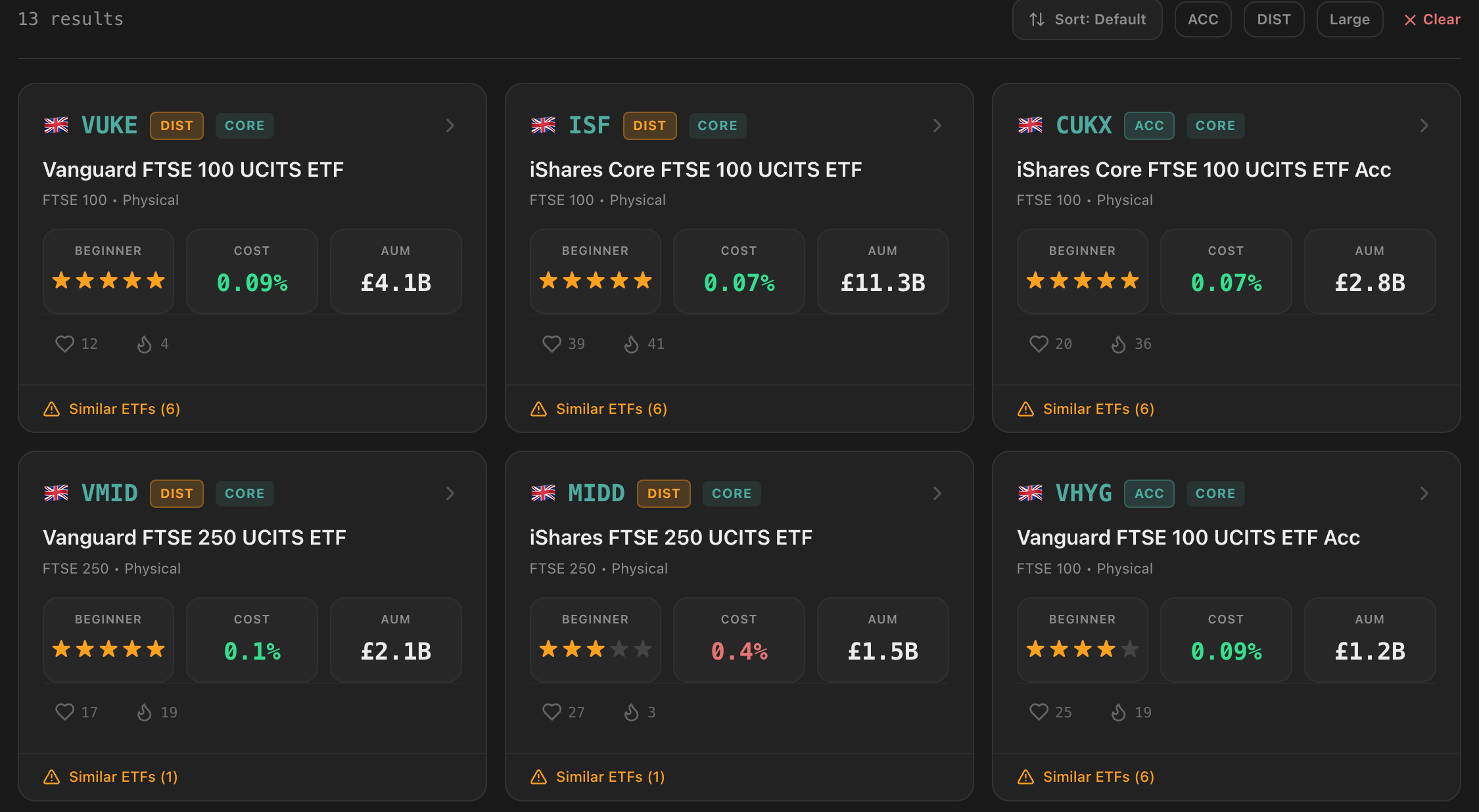
You can use the ETF and stock screeners to compare investments, look at important data and narrow down your options without jumping between dozens of websites.
The tools are not there to tell you what to buy. They are there to help you understand what you are looking at and make more informed decisions for yourself.
You can also use the portfolio tools to review what you already own, identify potential overlap and understand how your investments fit together.
Explore the Your Money Mate investing tools here:

Your Money Mate Investing Tools
Build a Portfolio You Can Actually Hold
You do not need the most complicated portfolio. You do not need 40 different stocks, and you do not need to discover the next Nvidia before everyone else.
You also do not need a WhatsApp notification telling you what to buy every Tuesday morning.
What you need is a portfolio that fits your life, your goals and your attitude towards risk. Most importantly, you need to understand it.
Because when markets eventually fall, knowledge makes it easier to stay calm. A portfolio you understand is easier to manage, easier to review and easier to hold through difficult periods.
A portfolio you copied is much easier to abandon.

Your Money Mate Plus
Premium FMP data stock selection, discover undervalued ETFs and stocks with over 25 year + historical data and overlap tools


